Is the beginning of the year a good time to change your passwords? Seems as good as any!
Here's my password "plan" to avoid using the same password on different URLs and hopefully prevent me from having to change ALL of my passwords at one time if there's a hack in one of my online profiles, etc.
I use a basic password that I customize for each URL. Then, I take the URL I'm logging into and pull two letters from it, capitalize them, and then add a weird symbol.
For LinkedIn, where my basic password is "pasword24" I would use something like: pasword24LI!
It's something I can remember and has lowercase, uppercase, numbers and a weird symbol. That way, all the passwords are similar and unique (to the point of a 2 letter ID that may be similar on different sites, like LinkedIn.com and Life.com (both start with LI).
You may want to use something that isn't a word or have duplicate or concurrent numbers or letters (which is why I deleted the second 's' and didn't use 21). I've been hit with that before and nothing's worse then having to have a special password once you've started working like this.
Monday, January 4, 2016


Wednesday, October 29, 2014
The secret to making things go faster? Trust.
IT'S ALL ABOUT PEOPLE
 Making awesome products with amazing people in a big hurry on the edge of the technological knife is fun! But it's not easy. Starting three video game studios in Austin has proven that to me without a doubt. Luckily a lot of people have helped me along the way.
 Thanks to those awesome people, I have over 20 years of Product Development and Project Management leadership experience producing, designing, and contributing to over 200 popular games on just about any platform you can name. It has been a great ride and I can say with authority that when you have a transparent environment with trust in your fellow employees, things just go faster.
IT'S ALSO ABOUT YOUR ENVIRONMENT
 |
| Trust can flourish if you allow it. |
STORYTELLING, EMOTIONAL JOURNEYS, AND ROCK STARS
I love building teams to make great experiences. It's been my fortune to have had the ability to own the project vision for many of the projects I have worked on and having that responsibility has been very exciting. I love telling stories and taking people through immersive, interactive, meaningful experiences that allow them to explore their emotions. I love building community around these experiences so people can share their emotional journeys with one another. When people tell me how my products have given them a positive emotional experience, I am always grateful for having had the opportunity to be part of their lives.TIME TO HIT THE STAGE!
 My role as a leader is like being the Road Manager for a band, in that my team members are the rock stars and my job is to make sure they have a gig, it's been marketed, their instruments are on stage in tune, the sound system is ready, and the fans are pumped up. All they have to do is make the music and rock the fans! When they're finished, I make sure they get a chance to sign autographs and have a new town in which to play. When the members of my team tell me they had a great gig because I have provided them guidance, authority, responsibility and assurance so they can be the best they can be, I am humbled.
 ---------------------------------------
Billy Joe Cain is the Business Development Director for Meta 3D Studios (www.meta3dstudios.com) in Austin Texas. He has worked for Electronic Arts and started three game studios in Austin, TX. Since 1992, he has created games such as Wing Commander: Prophecy and SpongeBob SquarePants: Revenge of the Flying Dutchman.
Please connect with him on LinkedIn! www.linkedin.com/in/billyjoecain
Tuesday, September 2, 2014
Ever had a Game Killed? Wow. It sucks. Here's how to deal with it.
As an Executive Career Specialist in the video game and technical industries, sometimes my background as a developer may have some bearing on how you should manage your career. I've told these stories to others over the years and it occurred to me that they may be able to illustrate a point Mary-Margaret has made in her blog post: "You are a Free Agent and That's Not Bad News."
LET'S GET STARTED

After an event like that, it is hard to decide to put your heart into your next game. It's a really difficult task and can seriously affect your emotional state.
I am going to try to be vulnerable in this article, and since these stories are real, I hope that I don't offend anyone by being too honest.
I have been on a lot of projects and the ones that stand out as the most painful are the biggies that got killed. I'll start with the first and go to the most recent. There are others I skipped and many left out. And there are plenty after 1999, too. Maybe I'll write those up one day. Let's get on with it!
RIP: WING COMMANDER II SNES 1994-1994
CAUSE OF DEATH: MARKET CHANGES
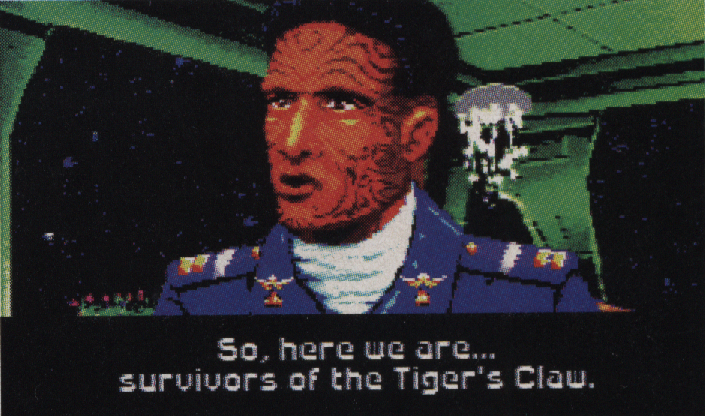 |
| We survived. The game didn't. |
The game was approved by Nintendo, but the publisher, Pony Canyon, decided to not move forward with publication because it was the end of the SNES's life cycle. So the game does not even exist now. No copies. Nothing. Not even a backup. That is horrible. That thing was FINISHED! Very frustrating, but not as bad as it could have been. We could have been at 95% and have had it put to sleep.
At least for me, it wasn't too bad; I had already moved onto a high profile project and was embroiled in making it get out the door. That helped my sanity greatly but I am certain it wasn't good for the others that had finished it.
Lesson learned: Get on another project that is moving quickly. It'll help you cope. At least it did for me.
RIP: CYCLONE ALLEY 1994-1995
CAUSE OF DEATH: LACK OF COHESION
 |
When he was asked during a product approval meeting what we thought about doing the game on Saturn (the game system), the answer he gave was that we'd do the game on every planet! Umm.... The final nail in the coffin. Bam.
Lesson learned: Have the right people with the right answers in front of the right budget committee.
RIP: PROWLER 1995-1996
CAUSE OF DEATH: FINANCIAL CONSTRAINTS
This one really hurt. I was brought on after it had been in production for a while. For well over a year I worked a lot of overtime with a lot of people. Then it was killed. |
| No. It was a MECH game. |
Prowler suffered from a lot of problems. It started as a 3DO game and since that market was changing, we moved it to PlayStation. That cost time and money. Always a bad sign. There were issues on the development team with project direction, we were using tools that were constantly evolving that required rebuilding the game models too frequently and the game's scope exceeded its budget.
Without going into too much detail, it was ultimately killed in favor of other projects that needed funding in order to meet financial goals of Electronic Arts.
Lesson learned: Pay attention to the power of the most important projects at the company. They may eat resources when they need them most. Most importantly... yours.
RIP: WING COMMANDER PROPHECY: PLAYSTATION - 1996
CAUSE OF DEATH: FINANCIAL CONSTRAINTS
 |
| It was GOING to be awesome. |
It was not long before it was apparent that the adaptation of Prophecy to PlayStation was not what was going to make the most money for the group, as we had to consolidate everything toward the main SKU. This was a harsh lesson to learn and it was unbelievably hard to deliver this news to my friends that I'd worked with for years. It still haunts me.
Lesson learned: If you are not working on the company's lead title, you are constantly on the chopping block, even when you don't think so.

RIP: CRIMSON ORDER - 1999
CAUSE OF DEATH: FINANCIAL CONSTRAINTS
This one was pretty much out of the development team's hands. The company was funded by winning a lawsuit against a larger company and the owner wanted to get the remainder of the funds owed. Allegedly so it would find the remainder of development.The owner went through the studio, filming how the projects were being made, and created a really cool video showing our progress. We were really excited to see that happen because we saw it as great marketing so we could get more press.
 Turns out that the right person saw it and realized we really needed the cash and that we were doing the right things, because the owner won the lawsuit and got the extra money.
 Then the owner took the money and the football and went home. Had the total right to go home. The trouble was that we didn't want to.
Lesson learned: Everything can blow up at any time.
There is a Silver Lining
Games get killed. Quarters come and go. Companies die. If you are going to work in an industry where your projects are pulled out from under you after almost killing yourself, you need to be aware of the dangers you face. And you should be aware of how much it hurts.
There IS a silver lining here. The people you worked with on these projects also suffered this pain. Do your best to remember the good times: the first time you could play it, adding a new feature and experiencing it, the long nights in design sessions, a great meal shared with your team, or whatever stands out to you. These people may be the bridge to another job or you may be their bridge to another job. They'll also be there to validate your pain.
Lesson learned: In the end, the only thing that matters is relationships.
Being Ready for the Kill
 |
| Too much paranoia here, but be aware that it MAY be up there. |
The best thing to do is keep your resume up to date. Always. Manage your online reputation. Pay attention to what's going on in the industry. Who is hiring? Go to local networking events. Stay in contact with your co-workers / friends / family that may be able to help you find new work. Start an IGDA group for your area. [Insert your own idea here.]
Lesson Mastery: You are your own recruiter. You are the only person that can really make these things happen. GO UPDATE YOUR RESUME NOW!
Final Thoughts
 |
| Help is totally okay to ask for. Really. |
And most of all, get yourself back into something creative that YOU are in control of start to finish. Take a class, find a hobby... just do something. Something that matters to you.
I'll end this with an invite for you to talk about your projects that were killed. How did that affect you? We're all in this together. Maybe you just need to talk about it. Like me!
---------------------------------------
Billy Joe Cain is an Executive Recruiter with Mary-Margaret Network (www.mary-margaret.com) and focuses on the video game industry. He has worked for Electronic Arts and started three game studios in Austin, TX. Since 1992, he has created games such as Wing Commander: Prophecy and SpongeBob SquarePants: Revenge of the Flying Dutchman.
Please connect with him on LinkedIn! www.linkedin.com/in/
Billy Joe Cain is an Executive Recruiter with Mary-Margaret Network (www.mary-margaret.com) and focuses on the video game industry. He has worked for Electronic Arts and started three game studios in Austin, TX. Since 1992, he has created games such as Wing Commander: Prophecy and SpongeBob SquarePants: Revenge of the Flying Dutchman.
Please connect with him on LinkedIn! www.linkedin.com/in/
Please connect with him on LinkedIn! www.linkedin.com/in/
Thursday, July 31, 2014
Speaking on Two Video Game Panels at Wizard World Comic Con in San Antonio 8/2/14 and 8/3/14
I have been lucky enough to speak on one of Genese's panels at a previous Comic Con in Portland so I'm very excited to be part of this one as well. Thank you, Genese!
If you make it to the San Antonio CC, come by and say hi, even if you don't make one of the talks. I'll be there geeking out with my kids I'm sure!
Here are the descriptions of the talks:
--------------------------------------------------
Saturday, August 2nd
 1:00 - 1:45PM
ROOM 214
Veterans of the video game industry join forces for this highly-anticipated panel. Don't miss Genese Davis (The Holder’s Dominion; MMORPG.com; The Gamer In You) Billy Joe Cain (Wing Commander: Prophecy) Joe Currivan (Producer - BattleCry Studios) and Antonia "Toni" Phillips (Live Producer - Electronic Arts; BioWare) give their insight on everything ranging from creating futuristic video games to delving into themes that span the most prevalent elements of pop culture. Get an exclusive behind-the-scenes look at video game story details, gameplay features, and the influence video games possess in both video game culture and pop culture at large. These high-power panelists will discuss the past of video game culture as it compares to today and how "gamification" is making it possible for everyone to become a gamer.
--------------------------------------------------
 WHAT VIDEO GAMES CAN TEACH
Sunday, August 3rd
2:00 - 2:45PM
ROOM 212
Join this high-powered panel divulging how much of an impact video games can have on people's lives in-game as well as offline. Parents advocating for a learner-centered approach often bring up the question, "Won't my kids just play video games all day?" Although the answer to that is multi-faceted, we know that no experience is devoid of learning. And, in fact, some may have more opportunities for development than we first believe. Join our featured panelists Genese Davis (The Holder’s Dominion; MMORPG.com; The Gamer In You) Robert Bell (Minister of Games - Enspire) Billy Joe Cain (Wing Commander: Prophecy) and Garry Gaber (Game Designer; Artist; Director; Founder - Escape Hatch Entertainment) as they discuss the benefits and potential drawbacks to video games and how to navigate both. This high-powered panel will plunge into video game culture and its social development divulging how video games affect our lives and education.
--------------------------------------------------
Wizard World - Billy Joe Cain
Monday, July 21, 2014
How to Reach the Hiring Manager
 Do you need more than one resume? Do you need to tailor your resume to the job you are applying for?
 Help the Hiring Manager
As a hiring manager, a custom resume is always a help to see how someone specifically fits the job role. The easiest way to get a hiring manager to cut to the chase is to make the resume tailor-fit to the role.
Why does a Hiring Manger Need Help From ME?
Hiring managers are overwhelmed and have a lack of time to read between the lines. They may have a stack of other resumes that have been customized with specific details clearly delineated so they can match them to the job, and if your resume requires them to guess about your skills at all, you get tossed.
There can be a disconnect between the job role and the resume's "soul." Your resume needs to emphasize your strength in that job specifically, not in the general career. They can tell if you really want it. Prove your interest in the job through your intent toward how you build your resume. Otherwise, you get tossed.
What if the Hiring Manager Isn't Reading Resumes First?
Often, an intermediary, such as a HR representative, is used to "filter" out the "obvious" resumes that aren't fits before they go to the hiring manager. The intermediaries are your biggest critics and the single biggest chance you will get tossed (by a human. See Applicant Tracking System, below).
When your resume goes through a human intermediary, this creates additional levels of communication breakdown. This means someone perfectly qualified gets tossed in the trash.
Applicant Tracking System (ATS)
These are programs that "read" your resume automatically and dissect them. There is so much to say here, it would need its own blog. This is a constantly changing effort between applicants and employers, so the effort put into this challenge is ongoing.
Top Reasons You Get Tossed Into the Circular File
- The intermediary may not understand the position or qualifications well enough to know how items on your generic resume are really relevant to the position.
- The intermediary may not understand what "equivalent experience" means to the hiring manager. Find a way to make equivalent experience match up with the job description.
- The intermediary may be going down the job description top to bottom and if your qualifications are like "Where's Waldo?", they may give up looking. Make it easy to find the relevant parts. Ideally you can even reorder your resume to make it even easier.
- Applicant Tracking Systems. (See above).
Think About it From Their Point of View
They are trying to winnow down a huge stack to a manageable number, and they may be sorting through a huge stack of resumes. Make it easy to get in the "yes" or even the "maybe" pile. Has that candidate seemed to care enough about your opening? Do they care about working here? Get someone else to pretend they are the hiring manager. Get someone else to pretend they are you, and you role play as the company representative.
Final Thoughts
 You want this job. You want this salary. Hiring managers want to hire someone that solves their pain. They are trying to make the best decision for their team, and are ready to spend a lot of money for it. You have one chance to get their attention to get them to BUY. Get really serious about this. Then go back and edit your resume to make it custom.
 Your Career is More Than Your Next Job - It's Your Mission. Want Help?
For those of you that are attending Casual Connect in San Francisco, you can come get the answers to the above questions and get advice to navigate your own career.
On 1pm, July 24, 2014, at Casual Connect in San Francisco, CA, Mary-Margaret Walker shares the best practices in resume writing and formatting at an exclusive workshop on July 24th. This workshop focuses on helping you build your resume, express your accomplishments and maximize your confidence.
Most people who can articulate a path to their goals frequently find they do not need to leave their current job in order to meet their goals. If you are already seeking your next role, let us make your resume land in the YES stack.
Specific Topics Covered:
• Resume Mechanics (What’s an ATS?)
• Keywords
• Formatting
• Content Layout
• How to speak about accomplishments
• What about LinkedIn?
• Typos, grammar, and editing.
Attendance requires a ticket, and is limited. Sign up here now!
---------------------------
Billy Joe Cain is an Executive Recruiter in the video game industry and has worked for Electronic Arts and started three game studios in Austin, TX. Since 1992, he has created games such as Wing Commander: Prophecy and SpongeBob SquarePants: Revenge of the Flying Dutchman.
Please connect with him on LinkedIn and mention you read his blog! www.linkedin.com/in/billyjoecain
Monday, May 12, 2014
The Eric Davis Interview of Billy Joe Cain from April 2007
Today, I was looking through my hard drive for some information and ran across this 2007 interview I did for a student, Eric Davis, while I was VP of Development for my company, Critical Mass Interactive. I always ask if I can reprint things, so I figured I'd go ahead and share this here. It's always fun looking into the past!
I only edited it so the spacing between the questions was even. And I added the pictures to explain what I was talking about. Enjoy the typos and things of that nature. It's what makes it SO awesome!
Enjoy!
bjc
----------------------------------
by eric davis
Interview with Billy Cain of Critical Mass
 1. What brought you into the gaming industry?
“Well, when I was a kid I was fascinated with video
games. There were a number of home
consoles that were becoming available there were arcade games that were out. I
spent, god, probably, I mean even when I was a little kid I played games before
there were video games. Like, I would play those old games… what do you call
‘em?
“Pen and Paper?” I said.
“Yea I played pen and paper but that was like when I got
older..” Cain tells.
“Ok.” I said.
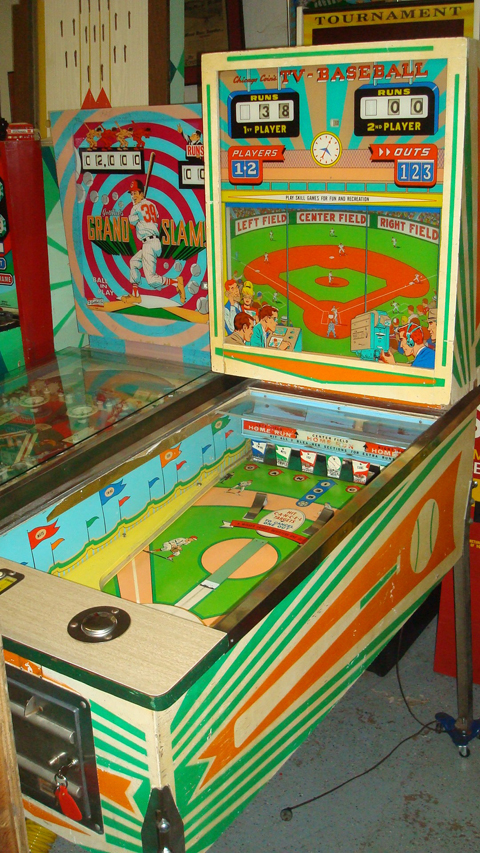
“It’s like when I was a little kid they had games like
baseball where you’d press a button. (Cain begins gesturing the game size)
The steel ball would come out from underneath this little covered thing, and
there would be this plastic bat and you would hit the button and wherever you
would hit it would get a Single, Double, Home Run, Triple or whatever. And it
would light up these little guys that would just be lit flat pieces of plastic
as they ‘ran’ the bases.” Cain proclaims.
“Is it about this big?” I say.
“Yea it was about that big and it was a full stand up arcade
machine. They also had other things like a driving game that had just a piece
of paper that just rolled by and a car that you moved left and right with the
steering wheel and basically it would determine where or if you would get hit
and flash lights on the screen if you wrecked. I was completely and utterly
fascinated with those things. And then when Pong got real big, I played Pong
and Gunslinger and all those old games. I became completely enamored with video
games.” Cain tells.
“Yea” I say.
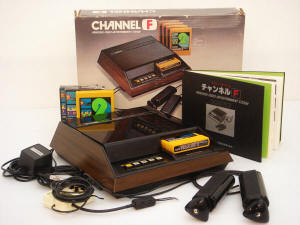
“Then the home systems started hitting the market and I
started getting involved with all those the Atari 2600 and others. But when all
that stuff happened there were a ton of different systems there was the
Fairchild, the 2600, the Odyssey (like Pong) and the Odyssey 2 and you know all
that kind of stuff and I was absolutely and just totally fascinated by it. So all of my friends and I would buy
different systems and all trade different games and you know you couldn’t
pirate those things there was no piracy - at least by any of us. What we did
was we’d pool our resources and each person buy different games and then we’d
just trade them all to each other. That
seemed to help us get our fix the way we wanted to get it. As the years passed, I played a ton of home video
games, non-stop arcade games and I really got into Defender because it was the
first game with a battery backup for high scores. Once I had mastered that game
they had this giant tournament at 7-11 and through that I became the Texas
Defender Champion.
“Nice.” I state.
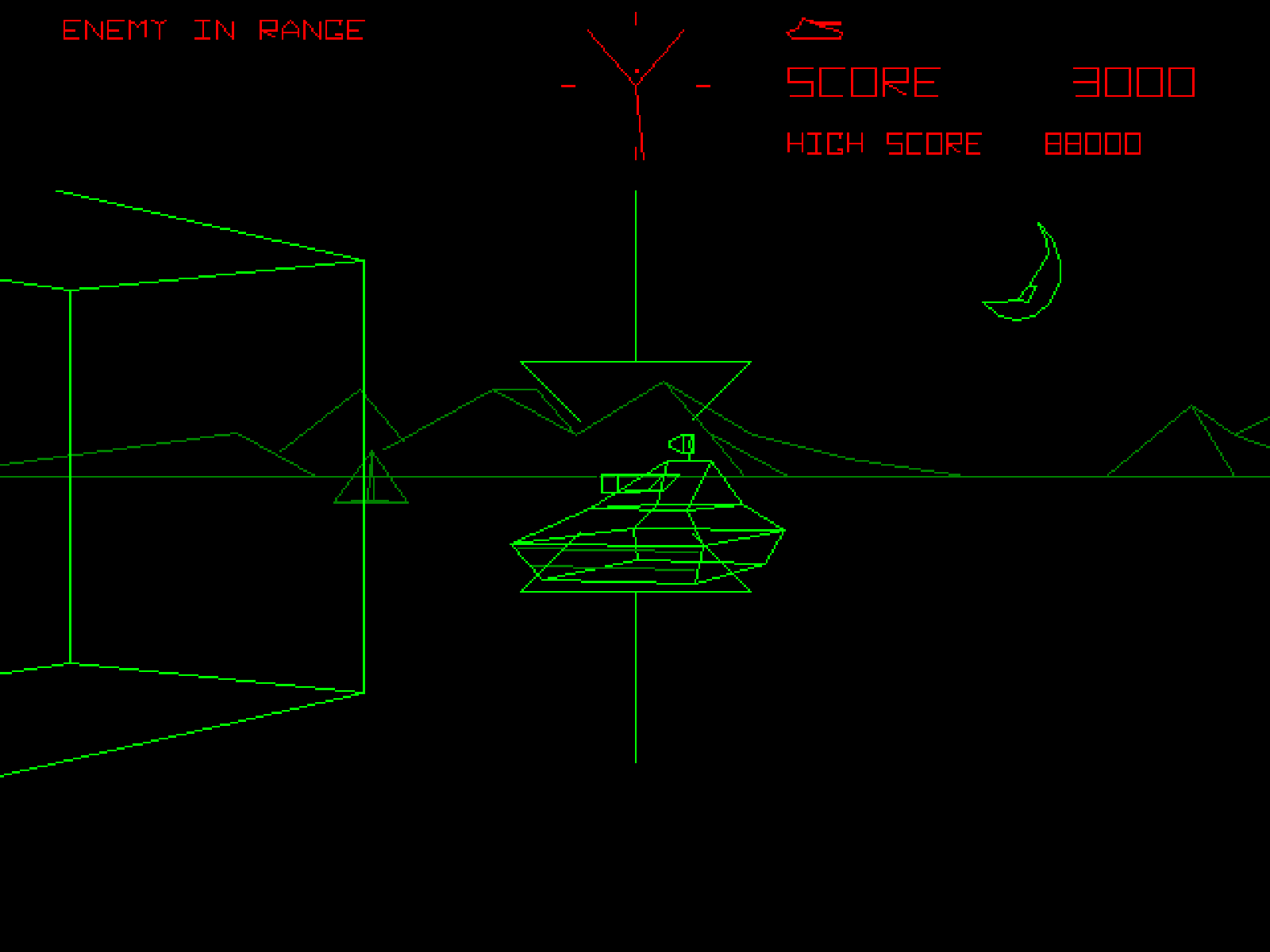
“But when I’d play these games I would dissect them and
figure out why is this happening? Why is the next level just a little bit
harder? I wasn’t doing it to become a game designer. I was doing it to play
better. I figured everything out, why does
Defender work the way it does? Why does Asteroids play the way it does? What’s
going on in Battlezone, you know? Eventually all of those ideas became the way
that I looked at different video games.”
 The way that I got into the industry was through my friend Steve
Powers. He and I had known each other our entire lives we grew up in the same
little town. We were roommates in
The way that I got into the industry was through my friend Steve
Powers. He and I had known each other our entire lives we grew up in the same
little town. We were roommates in  |
| The pic is before my time, but that's where we played "Green Guns" (Laser Tag) |
Since I saw what kind of games that Origin made,
I knew that if I was going to try to get a job there, I’d better know those
games backward and forward. I didn’t have a PC at home so I would go up to
Origin and play on Origin’s PCs and learn and play their games because they
were all ready installed right there. About 6 or 9 months later, we were
playing Laser Tag inside the Origin building at the Wild Basin
“That’s awesome.” I said.
“Yea, and they didn’t have locks on the doors or anything
crazy like that (they eventually put them in) but I knew enough people and they
would let me in to go see Steve. Ah, then (chuckles) one of the guys
there (David Beyer) started the Origin Softball team (Swing.bat). Since it was
his idea and Origin sanctioned it, Dave was in charge of the rules. Not enough
people from Origin signed up so I asked if I could join the team. Dave said
‘hell, yeah!’ So I was on the Origin softball team without being an employee and
we were playing with a lot of the guys that would just be making the games. Once
in a while we’d have Richard Garriott come out or Chris Roberts or his brother Erin.
It was totally bizarre. There I was just playing softball with all those guys
and of course they’re just guys like everyone else but it was odd because they
would look at me and you could see them thinking… “Do you work here?”
 After
about year and a half of trying to get a job there I finally got one. I started
as a designer working on Super Nintendo Games, we were doing a SNES adaptation
of Ultima 7 that was eventually called Ultima: The Black Gate. What I discovered when I first started
actually working there was… how should I say this… I didn’t feel like
management in the video game industry was at the level it should have
been. I had watched a lot of things
happen at Origin and I kinda knew how things worked but didn’t know how things
worked all over Origin because it was a pretty big company at the time, only to
get bigger later. When I started there officially, I began to realize there was
a void and while I was happy to design, I was also happy to do more. So what ended up happening was that every
time there was an opportunity, I took on more responsibility. I wasn’t getting
paid for it and I knew I wasn’t being paid for it. I didn’t care because I just
wanted to do more because I knew it was going to take me to the next
level. Eventually I got to a point where
within Origin, I didn’t think I was getting the ‘breaks’ that I could have. I
didn’t think that I was being noticed as well as I could have… This kind of
leads into how EA got into the picture and I think this is kind of interesting:
my first day was the day that Origin got bought by Electronic Arts.” Cain says.
After
about year and a half of trying to get a job there I finally got one. I started
as a designer working on Super Nintendo Games, we were doing a SNES adaptation
of Ultima 7 that was eventually called Ultima: The Black Gate. What I discovered when I first started
actually working there was… how should I say this… I didn’t feel like
management in the video game industry was at the level it should have
been. I had watched a lot of things
happen at Origin and I kinda knew how things worked but didn’t know how things
worked all over Origin because it was a pretty big company at the time, only to
get bigger later. When I started there officially, I began to realize there was
a void and while I was happy to design, I was also happy to do more. So what ended up happening was that every
time there was an opportunity, I took on more responsibility. I wasn’t getting
paid for it and I knew I wasn’t being paid for it. I didn’t care because I just
wanted to do more because I knew it was going to take me to the next
level. Eventually I got to a point where
within Origin, I didn’t think I was getting the ‘breaks’ that I could have. I
didn’t think that I was being noticed as well as I could have… This kind of
leads into how EA got into the picture and I think this is kind of interesting:
my first day was the day that Origin got bought by Electronic Arts.” Cain says.
“I read that, that’s right.” I exclaim.
“So they had taken the whole company out to Lake Travis, we
got on a party boat with free booze, they had a free Sega Genesis for everyone
(with a game as well), gave stock options to the people that were there prior
to the purchase, and gave talks about their pension plan and 401(k). This had to be the greatest first day in the
history of first days; I never could have imagined anything better. They said
“We are changing your benefits, it’s going to have vision and dental and better
medical.” It was wonderful. Now we’re
back to where we were. I took more and more responsibility on and I finally got
to the point where I was looking outside of Origin because I wanted the EA
executives to take notice of me. Every time people would come by from EA to
walk around for a tour, I would get up and introduce myself and try to take
them to lunch or go to lunch with them. That was my big plan to try and get
somewhere. I got to a place where I knew
a few of the executives and one day I got a phone call while I was working on Wing
Commander II for the SNES. It was Richard Hilleman, an EA executive from San Mateo . He said “Over
at EA Langley, they are having a huge problem with one of their games called Rugby .” This was in the UK
and this was the first version of Rugby that
EA had ever done. The year was ’94 and he said that they needed an Associate
Producer immediately. I said “Ok, when do I leave?” He said 2 days.” Cain
tells.
“How long was that trip for?” I ask.
“I had 2 days to get ready for a 3 month trip. I got ready and decided I would go learn
about Rugby so I went down to the stores and there were no books on Rugby that I could find! There wasn’t anything! I didn’t know anything about Rugby . All I knew is I had to pack up enough stuff so I
left a bunch of blank checks for Steve and just said write whatever needs to be
mailed for the bills. I went over and
worked on that and the title shipped on time which was great. But we KILLED
ourselves and I mean literally killed ourselves to do that but it gave me a
great opportunity to make a bunch of friends in England
and go see stuff like Stonehenge and stuff
like that. But when I came back, this is
kind of interesting, I don’t know how this will translate to tape or for your
story. But what I noticed was when I
left I was guy that worked on Super Nintendo titles who cares. But when I got there I was Associate Producer
that is going to do whatever it takes to get this thing finished do whatever he
says.” Cain says.
“So like starting fresh with new people.” I said.
“It was totally new, what was amazing though was when I hit
the ground people were like if I said jump they would say how high? But it
wasn’t, I wasn’t being mean I got there and said teach me I’m trying to help
you guys. They said here is a big stack of Rugby videos go learn and I got it
and was ready. We started working on the game from where it was. We had a lot of mutual respect for each
other, because I came in with this title so I must have achieved enough to get
this title and I helped them get things done. It wasn’t I was being an ass or
anything but it was like you know, lets try to get it done together and we
would crunch together, I wouldn’t go home or anything like that. Then when I got back to Origin, I was that
guy that worked on Super Nintendo titles again.
There was no transference of the things I had done they were like “Where
did you go for 3 months? England? Big deal, vacation? What’s the big deal?” And
I realized I couldn’t get anything done anymore, I had to get put on a few
projects to get my feet back underneath me.
Long story short, it was basically climb up to the top and then I moved
to another company and another company and then to this.
“That’s amazing.” I tell.
“Yea, its crazy its like 14 years of job experience rolled
into that kind of insanity.” Cain tells.
2. How long have you been involved with it?
Since November of 1992.
3. What kind of education does one need to become
involved in this field?
 “That is a good question because the answer to that question
has evolved over time. It used to be if you were really excited about video
games and had a lot of potential you could get a job in the industry and people
would teach you because it was kind of a um… an Apprentice like scenario. You want an Apprentice ok great, come in I’ll
show how this mysterious Alchemy works and you’ll rise to the level of… you
know… master. Now there are schools out
there that are not only kicking out phenomenal graduates that know all the
tools and they know how to make a game because they’ve done it because it was
there final project and have tons of talent and you can see it as well. So the trick is you’ve gotta have both, you
can have all the technically ability in the work, you can make photoshop sign
and dance and flip up and down and turn out a schedule, if you can do that. But
no one cares if your going as an artist if you don’t have the art skills or the
talent. I think a lot of times the
technical skill that you learn in a school is no replacement for actually
having talent. But you have to have…” Cain says.
“That is a good question because the answer to that question
has evolved over time. It used to be if you were really excited about video
games and had a lot of potential you could get a job in the industry and people
would teach you because it was kind of a um… an Apprentice like scenario. You want an Apprentice ok great, come in I’ll
show how this mysterious Alchemy works and you’ll rise to the level of… you
know… master. Now there are schools out
there that are not only kicking out phenomenal graduates that know all the
tools and they know how to make a game because they’ve done it because it was
there final project and have tons of talent and you can see it as well. So the trick is you’ve gotta have both, you
can have all the technically ability in the work, you can make photoshop sign
and dance and flip up and down and turn out a schedule, if you can do that. But
no one cares if your going as an artist if you don’t have the art skills or the
talent. I think a lot of times the
technical skill that you learn in a school is no replacement for actually
having talent. But you have to have…” Cain says.
“You can’t teach talent.” I say.
 |
| Make games, dammit! |
“You can’t teach talent, that’s right. But you can teach the
technical stuff and that’s one of the things we struggled when we started the
ACC program and many others that are starting the video game programs because
talent is, you have to be working on your talent all the time. I don’t believe people are born with talent
but they work their butts of to develop their talent. I don’t think people just open their mouth
and become an Opera Singer, you probably sang all your life quite a bit and
then got a vocal coach and technics but you have to have that talent that you
developed on your own that raw talent.
Have you ever seen Throw Momma From the Train, Billy Crystal (I nod),
A writer writes always! That’s what it means, if you are going to be an artist
you better draw, if your gonna be a designer you better design, if your going
to be a producer you better take some management classes. You need to know that stuff it can’t be
half-assed, you can’t just think you will learn as you go because that day is
over, there are people at the gate screaming and throwing themselves over the
gate to get into the industry. How you
rise above that noise with that talent and how you show it or shown in a way
that someone in the receiving end of that email will be able to get it and
quickly.
When I was in a band I took some music management classes, it was my
first time that ACC taught this. They said if your going to put a demo tape
together you better put your best song first and your second best song second
don’t do some artist crap, put your BEST one first. That’s exactly the way
demo’s are, because you gotta knock someone out if not that person watching is
going to go skip. And I can’t tell you
how many people have sent in art demos, programming demos, because if I’ve gone
so far as to double click on it, it better not waste my time… sorry. And I wish
that wasn’t the case, I wish there was time to teach people. Back in the day with Origin when everything
was 2-d and we were moving over to 3-d, Origin was back in the day was the
first one to start 3-d stuff. You know
Wing Commander was 2-d but looked 3-d, it was done in 3-d but just took
pictures from all the different views.
When we really made the transition all the artists were 2-d so we had to
train our artists so that was the humane way to do it they know the business,
they work together great, they have great rapport well your going to get em on
the 3-d boat or they are going to get left behind. We trained them and there were free 3-d
classes and I ended up going to them because I figured if I’m going to manage
these people, so as a manager you should have some working knowledge you should
know what people are doing. Did that answer your question?” Cain says.
4. What do you think of education especially in this
field of work?
 “You have to have a level of education so that you can walk
into a company and have base knowledge of what you are supposed to know. If you
are an artist and just drawn things or painted with oil, you can’t walk in the
door and get a job in the game industry, you must know Photoshop. It’s the fundamental Rosetta stone that
everyone uses. Also if you are going to be a 3-d artist you need to know 3dmax
or Maya, you have to have a working knowledge because if you don’t I’m sorry
there are a ton that have.” Cain tells.
“You have to have a level of education so that you can walk
into a company and have base knowledge of what you are supposed to know. If you
are an artist and just drawn things or painted with oil, you can’t walk in the
door and get a job in the game industry, you must know Photoshop. It’s the fundamental Rosetta stone that
everyone uses. Also if you are going to be a 3-d artist you need to know 3dmax
or Maya, you have to have a working knowledge because if you don’t I’m sorry
there are a ton that have.” Cain tells.
(We discuss more of a question I asked about 3-d
programs.)
5. What is your experience in this industry and what kind
of importance do you put on experience?
 |
| There's a difference |
“The number one most important thing…. (phone rings)
I can’t get that (he says to his assistant)… if I had 2 potential
employee’s and one of them had shipped a title and one hadn’t, I’d take the one
that shipped the title first and the reason behind that is because…. Going
through that last phase of finishing the game, I hate to say but it separates
the men from the boys. [NOTE FROM BILLY: I SHOULD HAVE SAID WHEAT FROM THE CHAFF. UGH.] But what it really does is it shows what elements from
the design are actually going to make it till the end of the game. You may think you can just put it in the
options menu. But once you’ve been through a game you can begin to question
things like you fully know what that means is if you test that game you have to
play the game with the option on then play all the way through with it off, now
can you change during the middle of the game now you have about a million
variables. But some people say if the option works then it works but that’s not
good enough for a lot of game companies specifically console games. Back in the old days and still true to today
basically Nintendo and Sega would test things themselves and if they found
anything wrong with the game they would kick it back to you. If one pixel was off or it was walking behind
this house and during this random scenario you see his feet that would be a bug
to them. It teaches you that console games are hard to develop, who’s in charge
of pc games? Nobody and makes it a lot easier. You can see most console games
do not crash and the reason is because the console manufacturers lose a lot of
faith on not only the game but the console as well. No manufactures have really made any money on
the hardware it’s the software which you will learn all this. But when people send their boxes back it breaks
the whole consoles. Imagine if a game
came out and just crashed your console right in the middle of say the season
and erased your memory and ruins everything. But tons of these have been
shipped and now your stuck and it becomes chaos. With PC games you can never know who’s fault
it was, so most just say reboot.” Cain tells.
6. What makes you want to stay in this field of work?
 “Before I started I had some horrible jobs some really
really bad jobs and I won’t bore you with them. But I’ll tell you this when I
first started in the industry I realized that I am surrounded by people that
are smarter then me. It was humbling and
encouraging to me, because I didn’t like working with people that aren’t well
not that they are but smarter then me because I’m sure they are, however being
put in a situation where the people around you pull you up, that’s awesome. But
in something else where you’re the only person doing all the people [NOTE: I THINK I SAID PULLING. :) ], and I’m
not saying everyone is stupid because I don’t believe that but its amazing when
you have the bar be raised and then you have to make that bar. And that is
happening to me everyday, and I’ve never felt in this industry at all that I
know everything that is going on and that things can’t be improved, because I
am constantly learning because who knows that call that I just had could have
been someone that is going to teach me something.” Cain explains.
“Before I started I had some horrible jobs some really
really bad jobs and I won’t bore you with them. But I’ll tell you this when I
first started in the industry I realized that I am surrounded by people that
are smarter then me. It was humbling and
encouraging to me, because I didn’t like working with people that aren’t well
not that they are but smarter then me because I’m sure they are, however being
put in a situation where the people around you pull you up, that’s awesome. But
in something else where you’re the only person doing all the people [NOTE: I THINK I SAID PULLING. :) ], and I’m
not saying everyone is stupid because I don’t believe that but its amazing when
you have the bar be raised and then you have to make that bar. And that is
happening to me everyday, and I’ve never felt in this industry at all that I
know everything that is going on and that things can’t be improved, because I
am constantly learning because who knows that call that I just had could have
been someone that is going to teach me something.” Cain explains.
7. What is your
overall view of the history of games?
“Video games?” Cain asks.
“Yea, I know you said that you had played other types before
but specifically Video Games.” I restate.
 |
| PCs rot. Consoles don't. Mostly. |
“Ok, what is my overall view? That’s a good question, I
think the market is becoming very splintered, which is good because that means
everyone is getting there needs satisfied.
You can see there are a lot of casual video games, retiree’s are playing
games and enjoying games that are made for them. The only thing that I would say that is bad
about that is you don’t get the huge break out hits anymore. There are more games then ever, which makes
it very difficult, I think. Let’s say PS2 or the major consoles that are out
there, and there are a ton of developers not doing consoles at all, there are a
ton of online games, casual games, pc games and they haven’t even touched
consoles, yet. You want to know
something that really bugs me? Its games that rot, lets take a PC games that
has been out for a while, your game has a shelf life, you have a shelf life,
and your computer has a shelf life. You
can’t play Wing Commander prophecy because I don’t have a 3DFX card because
that company went out of business and doesn’t look good in direct 3-d
mode. You might have that person out
there that has the retro machine, so I’m seeing a lot of pc games that are
ultimately going to rot. Like if you
have money you can keep updating and changing you games to keep up with
changing technology. My world view is
probably different from others is I want to play a game, play play play then
keep it and go back later on. But you
can’t do that on PCs, its not a new feat but it’s happening and been happening
since the beginning of pc’s. So I don’t know my overall view I want to make as
much money as possible but I feel our art form is going out of business… I do I
feel we are making (beginning to laugh) temporary commercial art, unless
you make it on a dedicated console system.
8. I have heard of some companies trying to make
characters in games have more emotion during the gaming experience. With these
kinds of break-throughs in games how do you feel that games will evolve?
 |
| This was just a matter of time. |
“What does that mean? People never have an answer for that,
but they can but I’m never sure if I’m convinced. I see a lot more people playing online games
and get into a VR or VR life, it’s happening more and more and more. Just look
at WoW they are going off the charts and they got Second Life where you live in
the game. People getting married in a game? It’s touched my life here because
it’s the guys that I work with here would meet up with people that they have
known for years and it totally freaks me out.
When they get together they are like fish to water, but then they talk
about their real life interests like when he went out with them and they were
in some crazy motorcycle clubs and totally freaked me out. That’s going to be more bazaar with the
online world and the virtual part, as world goes apart and then comes back
together.” Cain says.
(We talk more about actual events)
9. I saw that your company just finished a game for the
U.S. Air Force, how do you feel about the industry making more war-type games
for military personal to use as a training tool?
 “Yes we did, and I think its great, the whole point in my
world is that if your making a game so that someone can go out and practice.
Your going to save taxpayers money and save lives. I guess some say we are making a more vicious
killing machine, which is understandable, but I would rather help people
understand what they are doing and save lives. The one hand yea I’ll make money
on that and feed my kids and pay my mortgage but I believe in that and support
it. Am I making the guy pull the trigger
to drop the bomb, no but will I help him make it so he doesn’t miss and is
better at it, that may be immoral or whatever but I would love to help.” Cain
explains.
“Yes we did, and I think its great, the whole point in my
world is that if your making a game so that someone can go out and practice.
Your going to save taxpayers money and save lives. I guess some say we are making a more vicious
killing machine, which is understandable, but I would rather help people
understand what they are doing and save lives. The one hand yea I’ll make money
on that and feed my kids and pay my mortgage but I believe in that and support
it. Am I making the guy pull the trigger
to drop the bomb, no but will I help him make it so he doesn’t miss and is
better at it, that may be immoral or whatever but I would love to help.” Cain
explains.
10. In reading I saw that you have been a lead Designer
and been a Producer, the class I am taking now it focuses on Video Production
as a Producer. Which of those 2 categories do you enjoy more?
 |
| No. I don't say that. I just think it. |
“Whoa… I think I’m going to go ahead and say Producer
because I get to use my Design abilities. No less then an hour ago I was on the
phone talking about an online game and I got to help brain storm some stuff for
them. And as a producer you need to be
able to speak design or art or programming or whatever. You are just there to
how to do it right not only be one aspect of it. After I got done with that phone call I
really enjoyed it because I got to help brainstorm but then not have to go do
all the little details for it afterwards. So I really like it, because I am
plenty busy with my Producer stuff but being able to keep involved with design
stuff, I love.” Cain says.
11. If you weren’t
being the Vice President of Development for Critical Mass what would you be
doing or better yet what did you “think” you would be doing?
 |
| Yes, that's anatomically correct |
“(Laughs hard) Like the Spinal Tap question, if your
weren’t in spinal tap where would you be? You know if there were sex and drugs
I wouldn’t care if there were rock and roll.
What would I be doing if I wasn’t here? If I didn’t have money and
wasn’t in the game industry? I have no idea; I probably would have gone through
a number of bullshit jobs and gone back to school in business management. I wanted to become a small business owner
which would have been a bad deal because I wanted to open a CD store which was
ruined by Napster and people STEALING MUSIC (he yells into the recorder).
No I’m just kidding but I guess that is where I would have been.” Cain says.
 |
| It should say "Producers" |
12. What suggestions do you have, with the extensive
knowledge of the industry, for an entry-level game professional?
“Stay in school, don’t do drugs. My suggestions “A write
writes always.” If you find something you want to do, find a way to do it all
the time. If you want to be a producer find someone to talk to like other
classes and other projects and say I’d like to put some of this stuff to use,
because I guarantee you someone out there needs some help. You may start being
a list man and that’s a way to get going.
You job is whatever everyone else doesn’t do, that’s it your responsible
for it. Because if the game succeeds everyone else is commended and if it fails
its your fault. Its true.” Cain tells.
13. In the future my end goal is to be an Animator in the
film industry, specifically towards cartoon type features such as The
Incredibles or Toy Story. In my research
I’ve found most animation companies hire their animators from the Gaming World
because of the real world and team experience they get. Is what I found sound
accurate from what you may have encountered or seen?
 |
| How to make games |
“The closest I’ve been to
that is being on the full sale advisory board where I had the opportunity to
meet people from Disney who moved in and out of the game industry and they’ve
reached to a point in their career where they write their own ticket. And I
think your on the right path, I think you can do it if you have the
talent. And its not all about talent its
about being a Team Player being the producer and doing everything others don’t,
that’s being a team player. If you work with 5 other people and the toilet is stuck
sometimes it’s your turn to unclog the toilet. When I find the people that do
that I want to keep them around and tell others about them.” Cain explains.
Monday, May 5, 2014
How can Mary-Margaret Network assist job seekers?
 Recently I have been asked if Mary-Margaret Network could help individual job seekers find new positions in the game industry. While I wish we could perform that service on an individual basis, it is unfortunately outside our scope. However, what we can do is make you a better candidate!
Here is a look at how we can help you if you are currently looking for a new position.
WHAT WE DO
As recruiters we work for clients that are looking for additional staff. Our specialty is locating hard (or impossible) to find candidates.
WHERE TO START
If you or someone you know are looking for work, you can start by taking a look at our current listings. Our list of open jobs is always located at http://www.mary-margaret.com/jobs/
When a job seeker creates a profile on that page, their resume is always on hand for future consideration.
CAN YOU IMPROVE YOUR SEARCH?
Since I started recruiting full time, I have learned so much about the little (and big) things people can / must do to drastically improve their job search. That's not even hyperbole.
Accordingly, we have expanded our career services to provide strategic help for job seekers. Having a professional career counselor give you practical advice you can act on immediately makes a big difference.
We also have more services coming, including webinars and upgraded do-it-yourself help. All of that takes time and we are creating it as fast as we can to help as many people as possible.
As always, if you have thoughts, please share them here. We want to be the best assistance in the business and we can't do it without your feedback and direction.
---------------------------
Billy Joe Cain is an Executive Recruiter with Mary-Margaret Network (www.mary-margaret.com) and focuses on the video game industry. He has worked for Electronic Arts and started three game studios in Austin, TX. Since 1992, he has created games such as Wing Commander: Prophecy and SpongeBob SquarePants: Revenge of the Flying Dutchman.
Please connect with him on LinkedIn! www.linkedin.com/in/
Subscribe to:
Posts (Atom)
Subscribe To


 Posts
All Comments
Posts
All Comments